
About Lisa
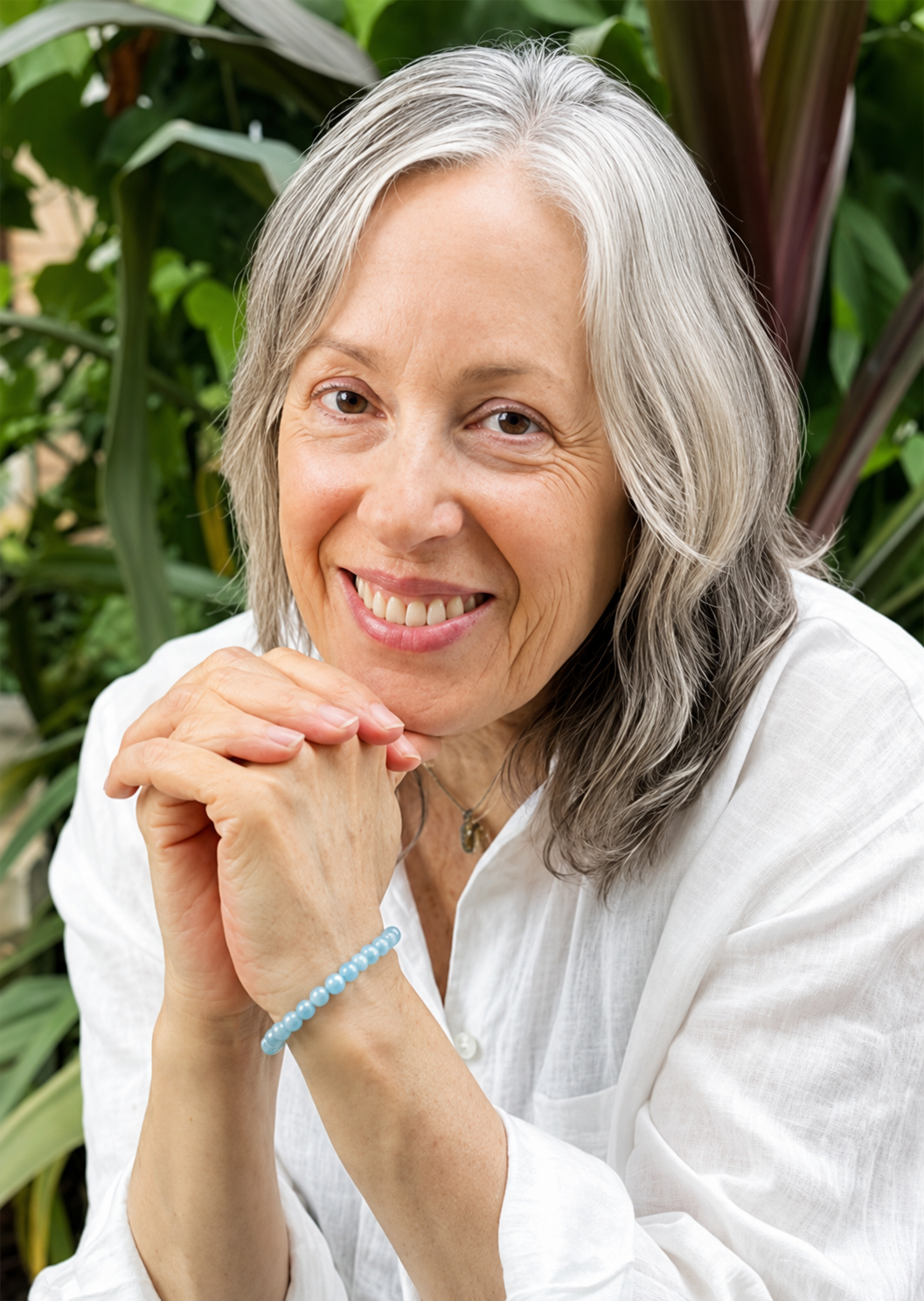
Background
When I was young, I was anxious and underprepared for life. I headed off to college with good intention but little direction. My passion was wanderlust but that wasn’t a degree, so I chose pre-law and within a year it was impossible to ignore my very low enthusiasm and corresponding low grades. I changed my focus to international studies and I enjoyed it so much that I completed a Master’s degree as well.
After finishing my degrees I spent several years roaming the world, undoubtedly my best education and one that shaped who I am. Among my many adventures, I lived in Peru and traveled throughout Central and South America and eventually made my way to China where I taught English for two years at a university in the southwest. While living in China, I took an interest in contemplative arts and the ancient disciplines that enhance physical, mental, and spiritual awareness, practices that I continue today. It turns out you can learn a great deal from exploring the world.
I returned to the U.S. and tucked into a career in aging research at the Disease Prevention Center at Stanford University School of Medicine. I still consider it a lucky accident that I was given the opportunity to be a part of the research advancing the understanding of aging, behavioral health, and neuroscience of the brain. I was struck by the potential for change and personal growth and it inspired me later to return to school for a Master’s degree in Social Work. There are many paths in mental health and I chose an MSW because of the focus on what makes life worth living, and the foundational belief that meaningful change can lead to well-being at any age.
I decided to pursue licensure and began my clinical training in refugee torture treatment at Survivors International, here in San Diego. This experience was life changing. I received incredible supervision and training in acute stress, trauma, and PTSD, and I learned the human capacity for healing and post-traumatic growth. I taught body-centered techniques in group therapy and I witnessed outcomes more effective than talk therapy alone. I continued my clinical experience in oncology at Sharp HealthCare where I used the healing arts room to support cancer patients in various stages of diagnosis, treatment, survivorship, and end of life. Working in oncology taught me the meaning of a life well lived.
Each clinical experience brought additional learning and insight, but it was my final clinical work in hospice that enlightened me. I sat with countless patients who shared with me their deep regret that they had run out of time without living the life they had intended. These years of education and experience in trauma, oncology, disease progression, palliative care, and end of life continue to inform how I practice as a therapist, especially my belief that time is the commodity that matters and what we do with our time is consequential, regardless of how much time remains.
Qualifications
Licensed Clinical Social Worker (LCSW) in good standing with the California Board of Behavioral Sciences. CA License #118086.
Advanced clinical training in trauma, PTSD, anxiety and depression disorders, aging, and grief, illness, and loss.
Counselor and health educator in aging research for 15 years at Stanford University School of Medicine Disease Prevention Center.
RYT Yoga instructor with specialized training in gentle yoga, adaptive yoga, and Yoga Nidra.
Tai Chi and Qi Gong practitioner and instructor for 25 years.
Master of Social Work from San Jose State University, Master of Art from the Monterey Institute of International Studies, Bachelor of Art in Political Science/International Relations from Cal Poly San Luis Obispo.
My Inspiration and Influence
-
Steven Porges, PhD
A pioneer in developmental psychophysiology and the creator of the Polyvagal Theory, which describes the link between psychological experiences and the physical manifestations in the body.
This theory explains how the autonomic nervous system, particularly the vagus nerve, shapes our emotional responses, social behavior, and ability to self-regulate, and how individuals who experience trauma can lose the resilience to return to a state of safety.
-
Lisa Feldman Barrett, PhD
A revolutionary researcher in clinical psychology and cognitive neuroscience, she rejects the classic view that emotions are universally pre-programmed.
Her research shows that emotions are unique experiences from our individual environment and our personal history. Her breakthrough research demonstrates that the brain’s most important job is not to think; it is to manage the complex systems of the body.
-
Ellen Langer, PhD
The first woman to be tenured in psychology at Harvard, she is considered the mother of positive psychology. She is a trailblazer in social psychology and she examines mind-body unity and demonstrates how our thoughts and perspectives have the potential to profoundly shape our well-being, especially as we age.
Core to her belief is the idea that we are not bound by our past experience or conventional wisdom. She was one of the first researchers in the United States to understand and implement mindfulness in her research.
-
Marsha Linehan, PhD
The creator of Dialectical Behavior Therapy (DBT), an evidence-based therapy focused on dialectics, the idea that two seemingly contradictory things can both be true.
In DBT, the dialectics primarily concern the balance of acceptance and change. Mindfulness, emotion regulation, distress tolerance, and interpersonal effectiveness are the focus of skill building in an effort to avoid extremes in thinking and behavior.
-
Laura Carstensen, PhD
A professor of psychology at Stanford University, the founding director of the Stanford Center on Longevity, and a researcher with the Stanford Life-Span Development Laboratory. She is best known for her work in the life-span theory of motivation, and the perception of time when less time remains.
She has inspired many people with her paradox of aging, her surprising scientific finding that emotional well-being and happiness can improve with age despite the losses. Her work shows that when we see time as open-ended, we focus on the future and when we see time as limited, we focus on the present.
-
Daniel Kahneman, PhD
This psychologist was the winner of the Nobel Prize in Economic Sciences in 2002 for his work that challenged the rational model of judgment and decision making. Dr. Kahneman described the two systems that drive how we think, one which is intuitive and emotional, and the other which is slower and deliberate.
Both systems are valuable, but it is important to understand the difference and how we can avoid the pitfalls of employing the wrong system for the circumstance. His groundbreaking work has been applied across numerous fields of study.
-
Anna Lembke, MD
A Stanford University psychiatrist and medical director of the Stanford Addiction Medicine Clinic, and an expert in behavioral and substance overuse and addiction.
Her most recent book, Dopamine Nation, explores how the relentless pursuit of pleasure leads to pain and how finding contentedness requires keeping dopamine in check. She has received numerous awards for her research and clinical innovation in treatment.
-
Steven Hayes, PhD
The creator of Acceptance & Commitment Therapy (ACT), an evidence-based therapy that promotes building psychological flexibility.
The goal of ACT is to create a meaningful life while also accepting the pain that inevitably goes along with it. In this approach, effective action is guided by our deepest values.